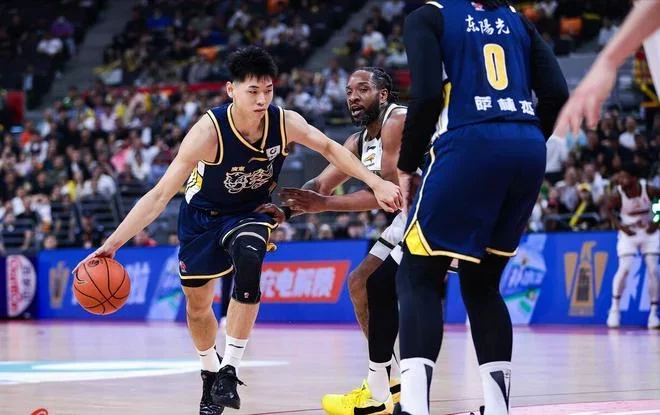

On the night of May 12, Beijing defeated Guangdong at home in the CBA playoffs, eliminating the visitors 2-1 in the series to advance to the semifinals. Guangdong’s season has officially come to an end, a campaign that can only be deemed “acceptable” at best. Losing to a deeper Beijing squad was somewhat expected, but looking back at last year’s roster moves, the team clearly fell short of expectations. Key additions like Cui Yongxi and Jiao Boqiao failed to deliver the star-level impact that was anticipated.
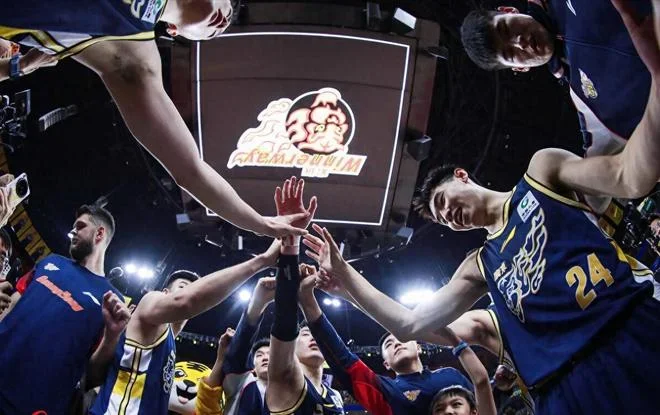
Earlier in the season, Jiao Boqiao clashed with head coach Du Feng and even took time off for depression treatment. After returning, his mentality took a hit. Cui Yongxi, however, had no known friction with the coaching staff, but his performance after returning from injury was underwhelming. Over the three playoff games against Beijing, he offered almost nothing of substance.
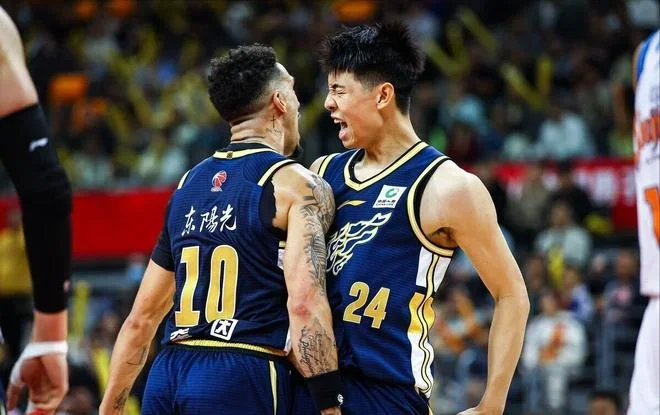
Since bursting onto the scene in 2023, Cui Yongxi rose rapidly to become one of China’s best small forwards. But after his stint in the NBA was derailed by injury, his career hit a turning point. General manager Zhu Fangyu signed him last year as a significant gamble, knowing that any player returning from a major injury needs time to recover.
Cui’s physical condition hasn’t returned to peak, but Du Feng’s bigger concern was his decision-making on the court. In the playoff series against Beijing, his performance was particularly disappointing. In the first game, a heavy defeat for Guangdong, Cui came off the bench and scored 7 points on 3-of-5 shooting—a decent showing. But over the next two games, he completely disappeared. In Game 2, he played just nine minutes off the bench and went 0-for-4 from the field. The simple numbers reveal his desperation to score; he forced four shots in limited minutes, and after that poor efficiency, Du Feng quickly pulled him. In Game 3, Cui played 13 minutes but again failed to score.
In contrast, Zeng Fanbo, another elite domestic forward with NBA aspirations, shined in the playoffs. He dropped 23 points in Game 1 against Guangdong, had an off night in Game 2, but quickly rebounded in the crucial Game 3 with 15 points, 3 rebounds, and 3 assists, staying on the floor for key stretches.
Compared to Zeng, Cui’s data and impact are far inferior. Du Feng gave Cui chances early on but eventually turned to veteran Zhang Haojia, a player long criticized by fans. Zhang knows his role—he does the dirty work, hits open threes, and his game-winner in Game 2 sealed the victory.
Cui Yongxi’s talent is undeniable, but he needs more time to fully recover from his injury. He only returned in March and played for two months; with a full summer of rehab, he should be better next season. However, his issue is clear: he must better understand his role within the team, balancing offense and defense. If he’s only looking to force shots and pad stats, that’s not what Du Feng wants. The coaching staff expects every player to play within a reasonable system.
In today’s CBA, domestic guards get some ball-handling duties, but the scoring load is mostly on foreign imports. For a small forward like Cui, unless he possesses exceptional ability, he must be willing to play a supporting role. At this stage, Cui lacks that elite skill set, and his future will depend on following the team’s system.