
Grégory Lorenzi, the soon-to-be sporting director of Olympique de Marseille, is set to face a whirlwind of challenges as he prepares to leave Brest after a decade. At 42, he will jump from one world to another, having witnessed his Brest team’s contrasting performances against OM earlier this season—first subdued at the Vélodrome (0-3 on November 8) and then brilliant at Le Blé (2-0 on February 20) under Habib Beye’s debut.
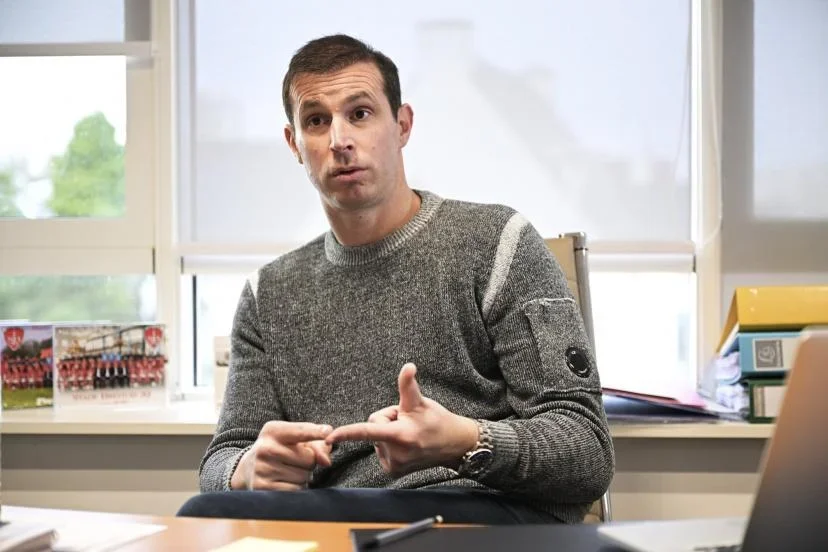
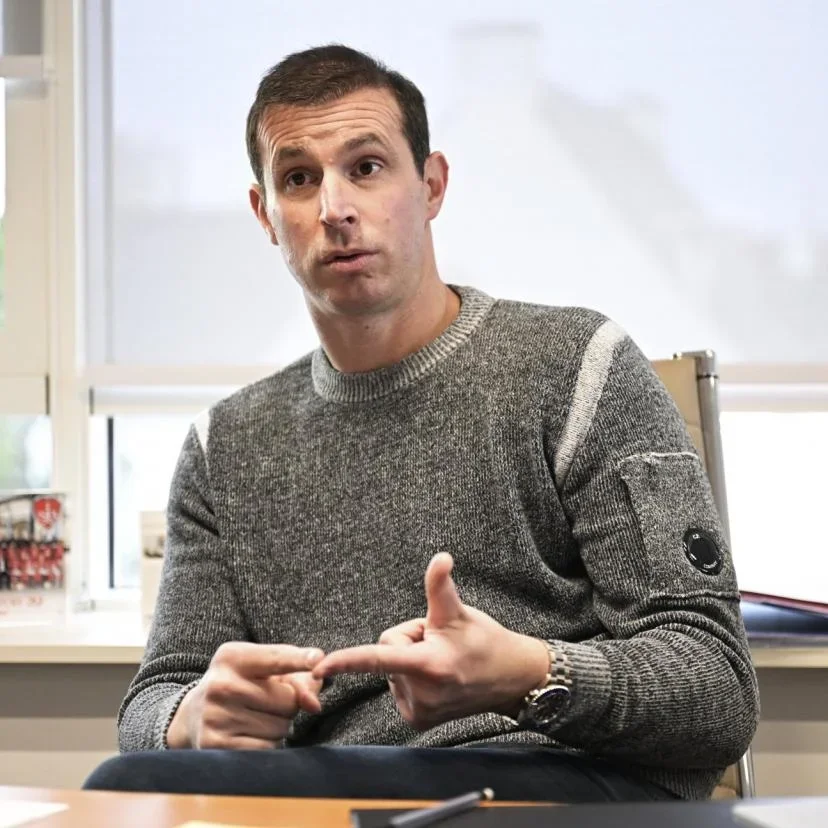
Lorenzi’s appointment as Medhi Benatia’s successor is not yet official, as final details are being finalized, but it has already sparked debate over his ability to adapt and thrive in Marseille’s intense environment, which has overwhelmed many executives in recent years. “Frankly, it’s impossible to anticipate,” one source admitted. “Lorenzi is a gamble at this level. Luckily, fans have softened since the cypress incident (the attack on the Commanderie in early 2021). The environment is slightly less exposed now.” A dressing room insider fears a “lack of natural authority. I’m skeptical, honestly. Moving from Brest to Marseille is a huge leap.”
Olivier Dall’Oglio, who coached Brest under Lorenzi for two years (2019-2021), countered: “Yes, there’s a world of difference in pressure, especially now, but if he’s going, he feels ready. He’s Corsican, with a Southern mentality, so he won’t be surprised by this context. It’s a logical step for his career and a real challenge. He could have taken an intermediary club, but he prefers to dive into the deep end. Why not? He has the shoulders for it.” David Wantier, sporting director of Auxerre and a long-time acquaintance from the transfer market, added: “I have no doubt. At Brest (2016-2026), he always worked for the institution. His openness and calm will help him blend into his new environment. He’ll implement a policy based on available resources and be clear about objectives. Often, people are disappointed by poor communication. But Greg isn’t a dream-seller.”
That’s no longer the trend in Provence.
Financially, OM is under pressure. Before their final match against Rennes on Sunday, the club could still hope for or fear the Europa League, the Conference League, or no European competition at all if they finish seventh and Nice wins the Coupe de France against Lens on May 22. That would be both a sporting and financial disaster. Even without Champions League qualification, the club has already lost significantly. Its economic model relies on the Champions League, which brought in about €50 million this season excluding ticket revenue. That fund should help offset losses but won’t prevent a new deficit, likely less severe than the record €105 million loss in 2024-25 under Frank McCourt.
Austerity looms under future president Stéphane Richard, and Lorenzi—who spent €54 million over ten years in Finistère (compared to double that for OM in just one season)—knows he won’t have the same budget as Benatia. Far from it. He might even have to prove himself before the financial year closes on June 30, as his new club is already under UEFA scrutiny and DNCG pressure.
Rebuilding the squad is a top priority. Lorenzi must manage loan returns (Meïté, Cornelius, Gomes, Moumbagna, Maupay, among others), potential contract terminations for high earners, and sales of key players sooner or later. Even before his arrival, offers have come in for Quinten Timber (24, signed from Feyenoord four months ago, contract until 2030) and Igor Paixao (25, also from Feyenoord this summer, five-year deal), both highly rated on the market. Mason Greenwood (24, 2029) and Leonardo Balerdi (27, 2028) are among the biggest assets to offload. With an expected downsizing, leaders already requesting meetings with management, loan players or those in extension talks left in the dark for months, and new arrivals already frustrated, a turbulent transfer window awaits. Lorenzi’s reputation was built on low-cost bargains and late-window expertise. “He’ll start from scratch, total uncertainty,” a team insider said. “Does he have the international aura and network needed?”
Wantier is confident: “He’ll have more resources to work better.” The challenge is aligning his methodology with a club of a different scale, deeply reshaped by his predecessor. “At Brest, he had total freedom, sometimes solo, with expanded powers,” Dall’Oglio compared. “The organization will be different, and his ability to adapt his working style will be what’s really tested.”
Beyond the squad, one of his first major decisions will be agreeing with interim management on a new coach to complete the project’s puzzle. Since Beye didn’t meet the conditions set in February—a podium finish in Ligue 1 and a Coupe de France win—he’s already on his way out. As with Lorenzi, the successor will ideally be French and experienced in the elite. That narrows the field, with few names filtering through so far. Two recurring candidates are Bruno Genesio (59), closer to leaving Lille than renewing but focused on his team’s season end, and Christophe Galtier (59), previously approached but not currently, under a golden contract until 2027 with Neom (Saudi Arabia), who has always said he dreams of coaching his hometown club. Another possibility is former Monaco coach Adi Hütter, who is free.