

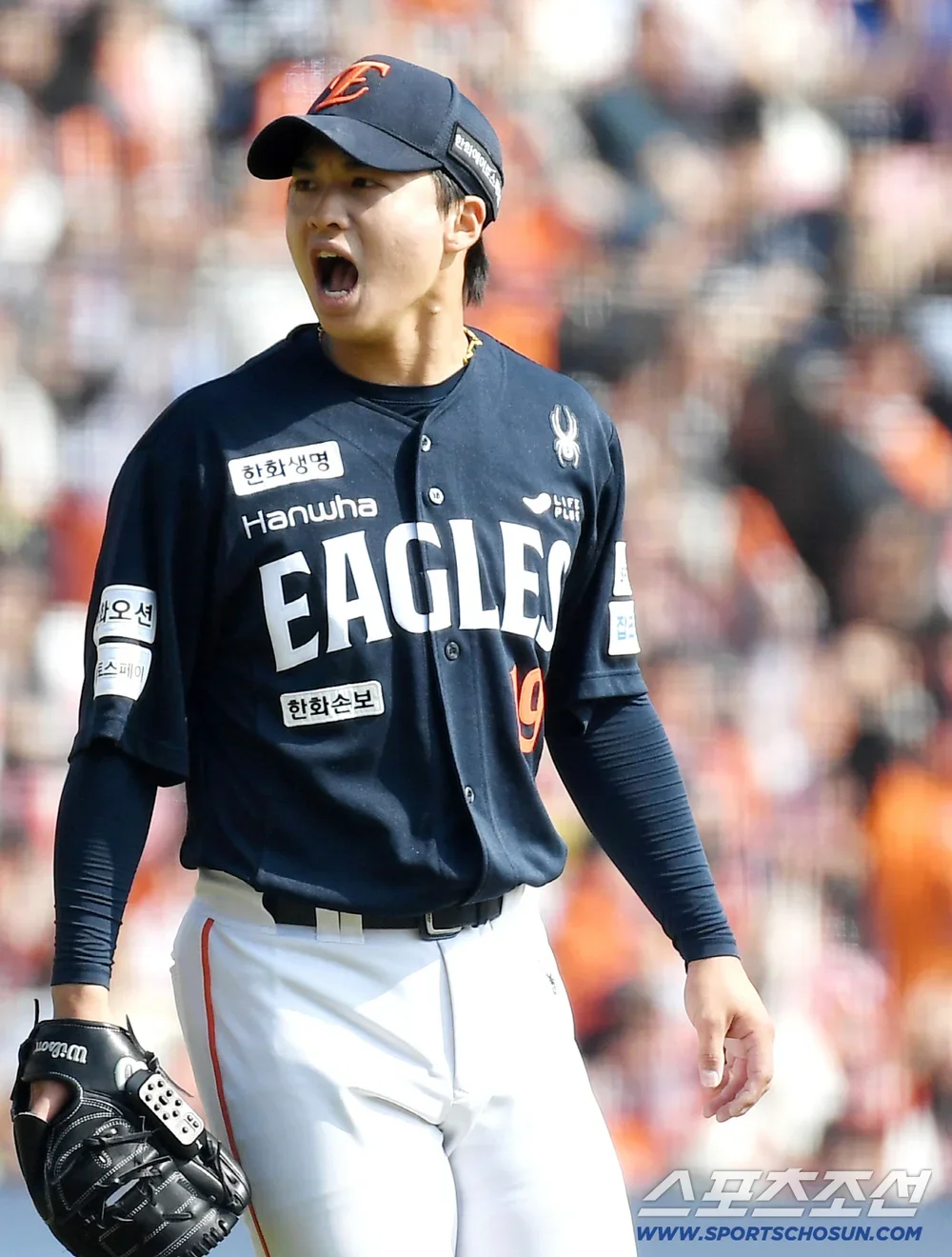
The KBO League game between Doosan Bears and Hanwha Eagles at Jamsil Baseball Stadium on April 4. With one out and a runner on first in the bottom of the fourth inning, Hanwha’s Wang Yan-cheng cheered after Jung Soo-bin struck out and first baserunner Park Jun-soon was caught stealing second. Jamsil = Song Jeong-heon, Reporter, [email protected]/2026.04.04/
[Sports Chosun Na Yuri Reporter] “Why are Japanese players who entered the KBO League through the Asian quota struggling?”
Japanese media has also expressed interest in the Japanese or Nippon Professional Baseball (NPB)-born Asian quota players performing in the KBO League.
The Asian quota system, officially implemented for the first time this season, allows each of the 10 clubs to sign one player of Asian or Australian nationality, with a maximum signing cost of $20,000 per month (total annual cap of $200,000). Dual nationals with non-Asian citizenship are ineligible, and only players who have played in Asian leagues in the previous or current year are eligible for fairness.
Eight of the ten clubs selected players from Japan or Taiwan as their Asian quota this year. The only Taiwanese player, Wang Yan-cheng (Hanwha), was with the NPB team Rakuten Golden Eagles until last year, so he is effectively considered an NPB product. The remaining two clubs chose Australian players: LG Twins selected Lachlan Wells, who played as a replacement for Kiwoom Heroes last year, and KIA Tigers picked Australian national team shortstop Gerald Dale.
However, the underwhelming performance of Japanese and NPB-born players has drawn attention from Japanese media. Japan’s ‘High School Baseball Dot Com’ reported: “During spring camp, there were many evaluations that ‘the level was higher than expected,’ but the atmosphere has gradually shifted since the opening. The flow has been different from expectations,” mentioning the struggling Asian quota players in the KBO.
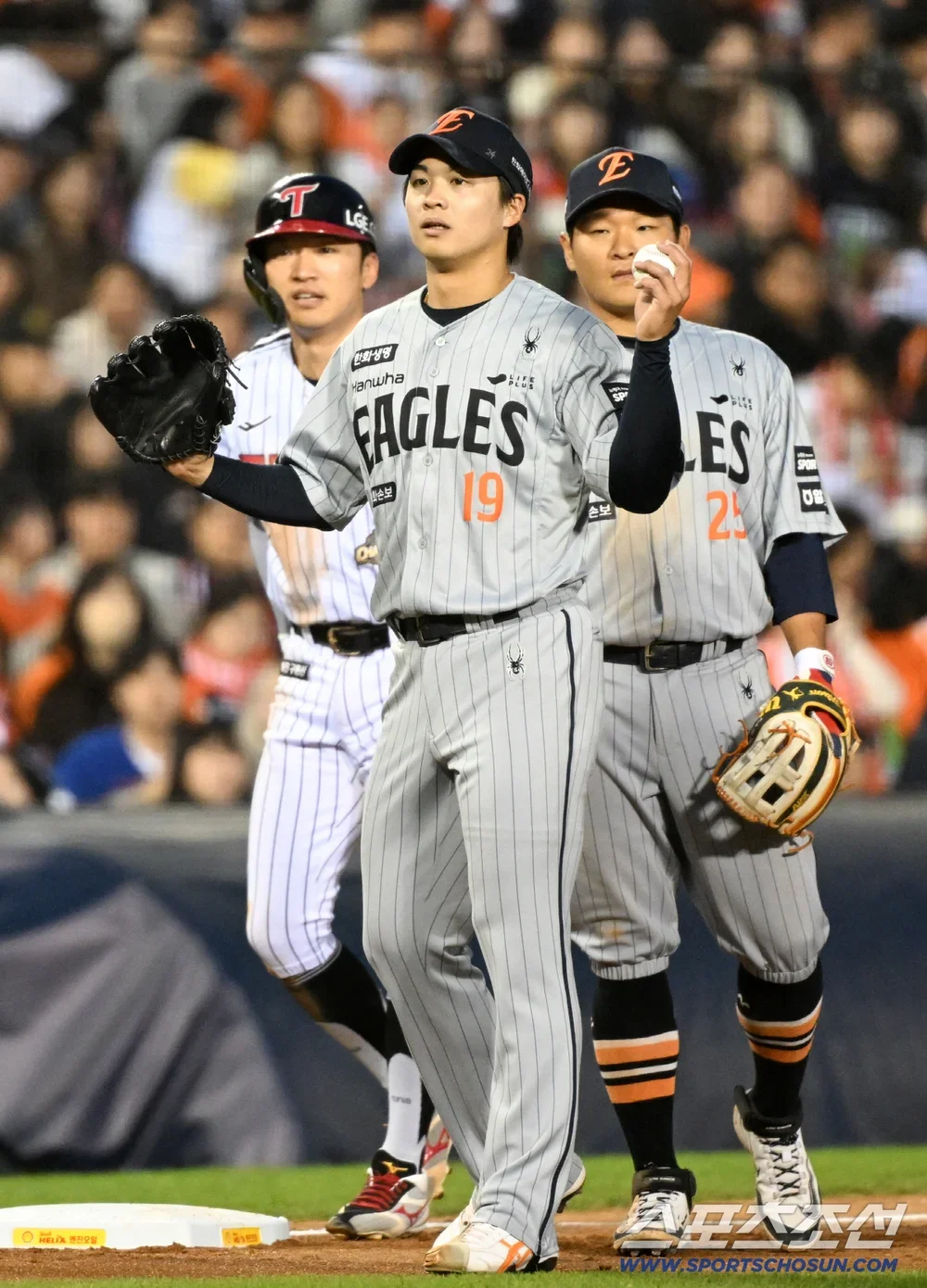
LG’s Park Hae-min and Hanwha’s Wang Yan-cheng catch their breath during a game between LG and Hanwha at Jamsil Stadium on the 22nd. Jamsil = Park Jae-man, Reporter, [email protected]/2026.04.22/
In particular, regarding SSG Landers’ Shota Takeda, who boasts a career of 66 wins in NPB—the most decorated among the group—the outlet said: “His early season performance has betrayed expectations.”
For Lotte’s Masaya Kyoyama and Doosan’s Ichiro Tamura, they noted: “The control issues that were a concern have been fully exposed. They lack stability.” Kiwoom’s Yuto Kanakubo was described as “having ups and downs early on, but is gradually adapting now.” NC’s Natsuki Toda and Samsung’s Yura Miraji were also deemed below expectations.
One pitcher who received positive reviews is KT Wiz’s Kouki Sugimoto. Having played only in independent Japanese leagues with no professional experience before directly entering the KBO, Sugimoto was “an unknown quantity, but he has added stability to the bullpen and his presence is growing,” the media commented. Sugimoto has recently gone nine consecutive appearances without allowing a run, tallying a total of six holds this season.
The highest praise went unequivocally to Hanwha’s Wang Yan-cheng. Though Taiwanese-born, he was a development player for the Rakuten Golden Eagles. About him, the report stated: “He was the biggest catch in the Asian quota market. He recorded the most wins among Rakuten’s second-tier team, attracting interest from several KBO clubs. Hanwha eventually succeeded in acquiring him after extensive on-site scouting.”
It added: “Initially, he was expected to compete for the fifth starter role or be used as a long reliever. But now, alongside Ryu Hyun-jin, he is a key pillar of Hanwha’s starting rotation. He is the most stable performer among Asian quota pitchers.”
